Railroading Material
Mechanics of Railroading
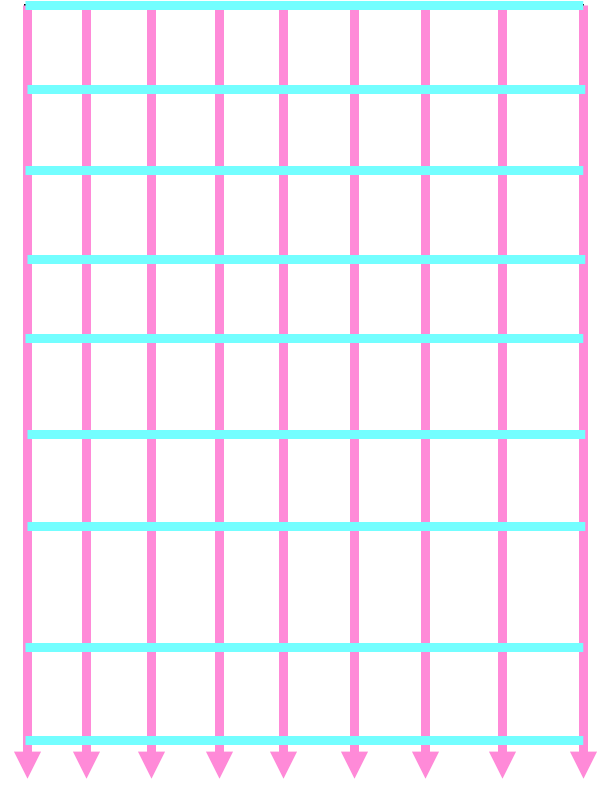
When material is woven, the vertical fibers are the WARP, and the horizontal are the WEFT.
- The WEFT is a specific, set size which is the maximum width of the material.
- The WARP is not a set size so, technically, the length is only limited by the space available to create a product. The WARP is also designed to carry the weight of the material and keep the fibers straight and flat.
WARP & WEFT
______________________________________________________________________________________________________
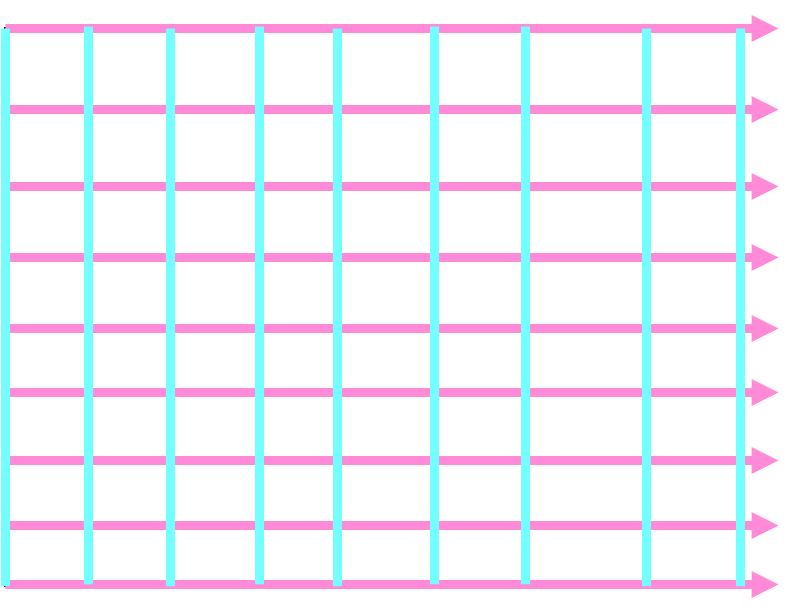
When you railroad material, you are turning it 90 degrees (see illustration below). This allows you to have more width to work with; however, you are limited on the height of the material. Because you are asking the WEFT fibers to hold the weight of the material, it will cup because these fibers were not designed to carry that weight.
The factory can give you an idea of how much the shade will cup.
Also, if the material has a definite pattern or texture, this will now be rotated as well. Other shades in the same room should be railroaded to match.
ABS requires 16” of material to wrap both the tube and the hem bar on Roller Shades.
- This means that the maximum height for a railroaded shade is the maximum width of the material minus 16”.
- For example, Galaxy Celeste has a max width of 78”. If a customer would like a shade at 96” x 72”, it would not be possible because the max height on a railroaded shade from this material is 62” (78-16)
______________________________________________________________________________________________________
What about the warranty?
- Because you are rotating the material in a direction that is it not meant to be in, the factory will void the warranty on the material. This means that if the customer does not like the cupping or the edges of the material start to fray, we are not liable for repairing or replacing this.
Was this article helpful?
That’s Great!
Thank you for your feedback
Sorry! We couldn't be helpful
Thank you for your feedback
Feedback sent
We appreciate your effort and will try to fix the article